
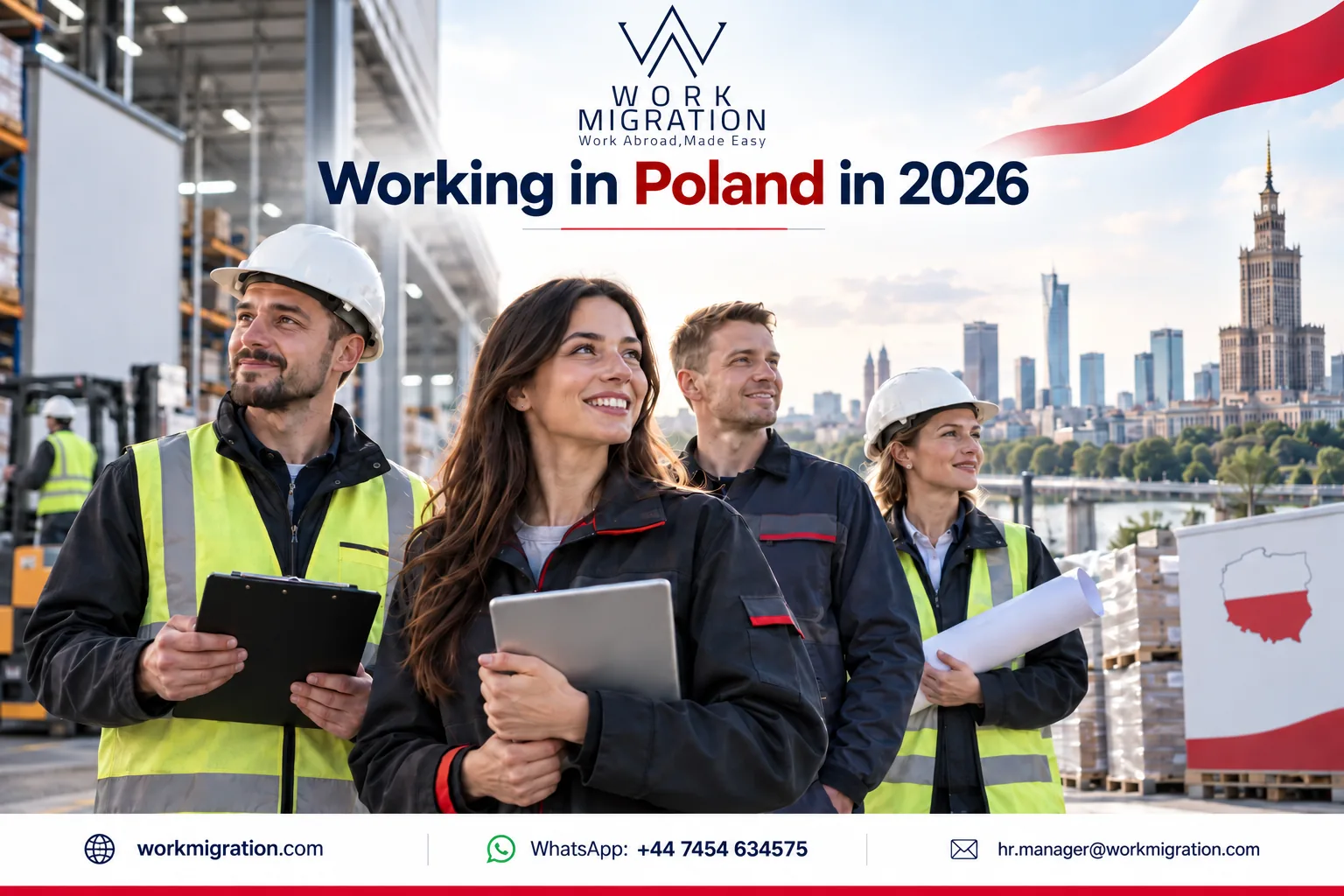
Jobs in Poland for foreigners in 2026 continue to attract applicants looking for opportunities in warehousing, logistics, manufacturing, food production, construction, and skilled trades.
For people searching for jobs in Poland for foreigners, understanding the legal process is just as important as finding a suitable vacancy.
However, receiving a job offer is only the beginning of the process.
Before applying, it is important to understand the difference between a job contract, a work permit, and a work visa. These are separate parts of the process, and confusing them can lead to unnecessary delays or problems.
Do Foreign Workers Need a Work Permit in Poland?
Many non-EU nationals need a work permit before they can legally start working in Poland, unless they qualify for an exemption under Polish law.
In most standard employment cases, the foreign worker does not apply for the work permit personally.
Instead, the Polish employer starts the work permit procedure with the relevant authorities.
This is why finding a real employer is one of the most important parts of the process. A genuine employer willing to legally hire a foreign worker is far more important than simply receiving a document titled “Job Offer.”
What Does a Polish Work Permit Include?
A Polish work permit is normally connected to a specific employer and specific employment conditions.
It is not an open permit allowing the worker to work for any company in Poland.
For this reason, a worker should carefully check the employer name, position, working conditions, and other important details before continuing with the visa process.
Changing employers later may require additional legal procedures.
A Work Permit Is Not the Same as a Visa
One of the most common questions applicants ask is:
“If I receive a Polish work permit, is my visa guaranteed?”
The answer is no.
A work permit is an important document supporting the purpose of employment, but the visa application is a separate process.
The final decision on a visa is made by the Polish consular authorities after reviewing the applicant’s documents and circumstances.
In simple terms:
The employer handles the employment and work permit side of the process, while the worker must also obtain the appropriate legal basis to enter and stay in Poland.
This is why applicants should be cautious of advertisements claiming:
“100% guaranteed Poland visa”
or
“Once the work permit is issued, the visa is automatic.”
These statements are not accurate.
What Is a Polish Work Visa?
For workers planning a longer stay, a Polish national visa, commonly referred to as a Type D visa, may be appropriate depending on the applicant’s nationality, country of residence, and individual circumstances.
The exact visa procedure and required documents can vary depending on the Polish embassy or consulate responsible for the application.
Applicants should always check the requirements of the specific Polish diplomatic mission handling their case.
How Does the Poland Employment Process Usually Work?
A well-organized process starts with the job itself, not with the embassy.
1. Find a Genuine Employer
Before thinking about a visa appointment, make sure you understand the employment offer.
You should know:
- The employer’s name
- The position
- The city or workplace location
- The salary and payment conditions
- Working hours
- Contract type
- Accommodation conditions, if accommodation is provided
Do not rely only on screenshots or WhatsApp messages.
A professional employment process should become clearer as it progresses, not more confusing.
2. Prepare Your Documents
Depending on the position and the employer, applicants may need to provide several documents.
Common documents can include:
- A valid passport
- Curriculum Vitae
- Contact information
- Residential address
- Professional certificates
- Work experience certificates
For skilled positions such as welding, electrical work, machinery operation, or construction trades, experience and qualifications may play an important role in the employer’s decision.
3. The Employer Starts the Work Permit Procedure
After the employer accepts the candidate, the company can begin the appropriate procedure for employing the foreign worker.
It is important to understand the difference between:
“The work permit application has been submitted”
and
“The work permit has been issued.”
These are not the same stage.
Applicants should always ask about the actual status of their file.
4. Review the Work Permit Carefully
Once the work permit is issued, the applicant should review the document carefully.
Check details such as:
- Full name
- Passport information
- Employer
- Position
- Employment conditions
Any important error should be addressed before moving to the next stage.
5. Apply for the Visa
Once the required employment documents are ready, the applicant can proceed with the visa process according to the instructions of the Polish embassy or consulate responsible for their place of residence.
Requirements may differ from one country to another.
For this reason, applicants should avoid relying on document lists shared by someone who applied months earlier or in another country.
Always verify the latest requirements directly with the relevant Polish diplomatic mission.
What Happens After Arriving in Poland?
Arriving in Poland does not mean that all legal procedures are finished.
The worker must continue to comply with the conditions of their employment and legal stay.
Workers who plan to remain in Poland for a longer period may also need to consider residence-related procedures depending on their situation.
Immigration and employment procedures can change, which is another reason applicants should always rely on current information rather than old social media posts or outdated guides.
How Can You Recognize a Suspicious Job Offer?
Some warning signs should always be taken seriously.
Be careful when:
- The employer’s identity is unclear
- The job position is not properly explained
- The salary keeps changing
- The accommodation conditions are unclear
- Someone promises a guaranteed visa
- Large payments are requested without a clear agreement
- You cannot verify who is actually employing you
A legitimate employment process should provide clear and consistent information.
Jobs in Poland for Foreigners in 2026: Opportunities Without High Qualifications
Yes.
There are jobs in Poland that do not always require university qualifications or extensive experience.
Opportunities may exist in sectors such as:
- Warehouses
- Logistics
- Manufacturing
- Food production
- General labor
Applicants exploring jobs in Poland for foreigners should always verify the employer, contract terms, salary, and legal employment procedure before proceeding.
Workers with technical experience may also find opportunities in areas such as:
- Construction
- Welding
- Electrical work
- Machinery operation
However, the existence of a vacancy does not automatically mean the employer accepts workers from outside the European Union or is willing to arrange the necessary employment procedures.
This must be verified for each position.
Frequently Asked Questions
Can I Apply for a Polish Work Permit Myself?
In a standard employer-sponsored employment process, the employer normally starts the procedure related to employing the foreign worker.
Does a Work Permit Guarantee a Visa?
No.
The work permit and visa process are separate. The final visa decision is made by the Polish consular authorities.
Can I Work for Any Employer After Arriving in Poland?
Not necessarily.
Work permits are generally linked to specific employment conditions and a specific employer. Workers should verify the legal requirements before changing employers.
How Long Does a Polish Work Permit Take?
There is no single guaranteed processing time for every case.
Processing times can depend on the type of application, the responsible authority, workload, documentation, and the individual case.
Applicants should be cautious of anyone promising an exact guaranteed approval date.
Before You Start Your Poland Employment Process
Instead of starting with the question:
“How much does the visa cost?”
Start with the questions that matter most:
Who is the employer?
What is the job?
What type of contract will I receive?
What is the actual salary?
What are the accommodation conditions?
What legal employment document will be used?
When these details are clear, it becomes much easier to understand the process and make an informed decision.
Work Migration supports applicants by helping them understand international employment procedures, prepare their documentation, and follow the administrative stages connected to available job opportunities.
For information about current opportunities and the requirements for your nationality and professional background, contact Work Migration to learn more about the available options.